

By: Dr. B

I received a text from a Special Education Director a few days ago, stating, “Dr. B we need you, we have a kiddo that looks like your kind of student.” I set up a meeting and met with the team and found out that the child was diagnosed with ADHD and this 6 year old was hitting, kicking, biting, and eloping from school. The team explained that they were concerned because he was making statements about how he wanted to hurt them. I asked the team if they knew if the student had an ACE’s screening, Adverse Childhood Experiences, and they indicated that they had not heard. In a 2019 article by Lisette K.M. Walbeehm-Hol and Jamiu O. Busari stated that only 17% of providers complete an ACE’s screening (2022). I quickly pulled up a screening tool while we chatted and based on a brief conversation noted 3 indicators.
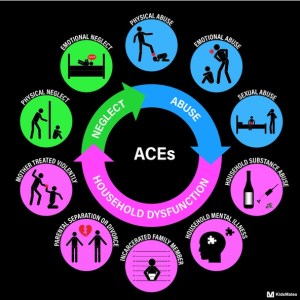
Here is a list of the ACE’s indicators:
● Physical, Emotional, or Sexual Abuse
● Emotional or Physical Neglect
● Incarceration of a parent
● Divorce or Separation of a parent
● Mental Illness within the home
● Domestic Violence within the home
● Bullying
● Racism
● Natural Disaster
● Refugee Experiences
● Witnessing a Violent Crime
(Isler, 2023)
Next we reviewed the list of symptoms for toxic stress in children;
● Withdrawal
● Defiance
● Aggression or risky behavior (often times targeted to someone or themselves)
● Sleep Disturbances and/or nightmares
● Memory Problems
● Confusion/Disorientation
● Poor Concentration
● Difficulty identifying people or objects
● Physical Pain – headaches, stomach aches, digestive issues, etc.
● Overwhelmed
● Anxious or afraid
● Depression, disinterest
● Racing thoughts
● Irritable, angry, impatient
● Hyper, unable to calm down, always in motion
● Lethargic and unable to feel rested
Obviously, this list could indicate a number of things, one of which is ADHD, which is why it’s so important that an ACE’s screening be completed and why a medical intervention like medication may not provide the appropriate intervention. This student, according to the educators, was displaying 8 of the symptoms.
So, What is Toxic Stress?
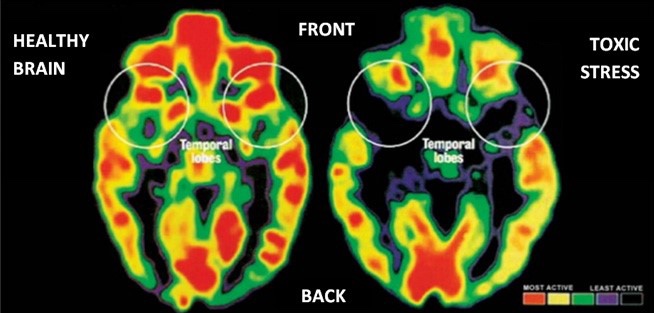
According to the ACE’s Aware (“Aces Aware” 2024) Toxic stress is the body’s response to lasting and serious stress. Meaning that the body goes into the freeze/flight/fight response over and over again, typically not ending in a 3 month or longer period. When this happens the body can’t turn off the stress or even adequately evaluate stress normally. This causes the fear center of the brain (limbic system, amygdala) to increase in size (Texas Children). This causes this area of the brain to become overactive and is especially dangerous for children whose biology is developing. In response to this stress children develop maladaptive coping skills, poor stress management, unhealthy lifestyles, mental illness, and physical diseases according to the National Library of Medicine article by Hillary Franke (2014). It can lead to health issues, mental illness, substance issues, issues with cognitive functioning, immune functioning and more.
A student that I started working with 2 months ago is a high school student in which we have identified at least 7 ACE indicators. This student has been diagnosed with several mental health issues, ADHD, and her academic testing shows an IQ that is much lower than had been estimated 3 years prior to the recent evaluation she had. She is also out of school quite frequently for an autoimmune disorder she has been diagnosed with the last year. Could Toxic Stress be impacting her? Toxic stress is chronic and the presence of 4 or more ACE’s is an indication that someone is more likely to experience Toxic Stress.

So if you don’t have ACE indicators or only have one or two can you have Toxic Stress?
Yes, you absolutely can, the list is not exhaustive and there are definitely other issues that could create stress. For instance, COVID 19 created a very unique stress. The behavioral incidences the year returning to school after the lock-down from COVID 19 were significantly lower than they had been prior to COVID 19. However, the behavioral incidences that have been occurring in the past year are significantly higher than pre-COVID. Symptoms that could indicate Toxic Stress are also more prevalent in the past three years.
How do we support those that could exhibit toxic stress?

● Relationships with a loving supportive adult is the most significant supporter to reduce stress – physical connection is needed – there is a great article that I often speak about with my own children when they are feeling overwhelmed, it’s called Lick Your Rats (Lick Your Rats) and I will ask them do you need some love, and kiss them all over their faces they laugh and lean into kisses. To my knowledge, my girls are low on the ACE’s screening, however, both of my children were adopted and my youngest had some extreme medical issues as an infant and was not placed with me until she was almost a week old and ended up hospitalized for several weeks as an infant and she has demonstrated signs of Toxic Stress so our plan at reducing her stress load involves all of these supports listed. Many times with my students I will ask if they want to play Sumo and we will use mats of pillows and lean into each other with all of our weight. This helps to satisfy the need for physical connection.
● Regular Movement (this will release the neurohormones needed to help with stress)
● Healthy diet – being able to access the necessary vitamin and nutrients is vital to lifestyle and those undergoing stress typically need higher amounts of Vitamin B
● Hydrate – studies show that 2/3 of the children diagnosed with ADHD are dehydrated daily (Mannion, 2023)
● Sleep – having a quality sleep routine will help to increase the chances of quality sleep (see our article on sleep hygiene and getting rest in 10 minutes)
● Regulatory activities – like meditation, heavy work, balance work (we have tons of these! Check out our behavior cheat sheet)
● Avoid stimulants
● Sensory support – this could mean modulating light or sound to be less jarring to the nervous system
● Play is vital it’s the key to more challenging tasks and develops social emotional skills needed
● Therapeutic support
Do we all have Toxic Stress?
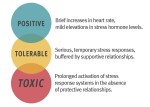
The center for Developing Child at Harvard University classifies stress into three categories :
Tolerable – brief elevations in heart rate and hormone levels
Bearable – serious temporary stress responses supported by a healthy relationship
Toxic – prolonged activation of stress response in the absence of protective relationships (Toxic Stress, 2020)
Based on this classification it further supports that healthy relationships are a critical factor. However, how can we determine what is healthy? As that can be subjective and there can be variability in the health of relationships.

Which brings us back to the question Do We all Have Toxic Stress? Probably not, but many of us have endured acute, or acute episodic or even chronic stress. Acute stress is a continuing response to a one-time stressor. Acute episodic stress is intense stress in reaction to trigger. Sometimes, the stress is the result of unrealistic expectations of themselves, the emotions are intense and not chronic. Whereas, chronic stress is when it is ongoing and impacts the mental and physical well being of the individual.
The problem with stress lies in when an individual experiences a prolonged state of stress where the stress neurohormones are continually being released. This puts the body and mind at a disadvantage and encourages a compromised state where the mental, physical, emotional, and behavioral elements are unable to function properly, and the world feels unsafe.
Stress in and of itself is not a bad thing, it’s actually a wonderful thing that helps the body prepare for challenges and can be beneficial by causing the body to adjust and adapt and become more resilient. Very importantly is that it increases the stress hormone oxytocin which causes us to seek support and even encourages us to notice when someone else is having a stress response. This is likely one of the reasons why healthy relationships are so critical.

Bottom line, relationships are a major component. Now, I am not suggesting you lick your kids or students, however, having warm, trusting relationships is the key to supporting healthy development. For students to feel safe at school, it’s crucial that they can place trust in the adults around them. Establishing trust involves cultivating relationships that foster a sense of safety. Developing healthy connections with students holds significance, especially as they may not encounter such relationships beyond the school environment. Implementing additional support strategies is critical if Toxic Stress is suspected or known. Success on the path to positive change relies on the key components of healthy relationships, trust and safety. Encouraging providers to screen for the ACE’s will help to ensure that we are providing the appropriate supports.
References
Frank, H. (2014, November 3). Toxic Stress: Effects, Prevention and Treatment. https://www.ncbi.nlm.nih.gov/pmc/articles/PMC4928741/
Home. ACEs Aware. (2024, January 18). https://www.acesaware.org/
Isler, A. (2023, December 6). Toxic stress: Tips on healing it | healthnews. Heathnews. https://healthnews.com/mental-health/self-care-and-therapy/tips-on-healing-toxic-stress/
Lick Your Rats. Learn Genetics: Genetic Science Learning Center. (n.d.). https://learn.genetics.utah.edu/content/epigenetics/rats/
Mannion , K. (2023) Distracted and Dehydrated: The link between ADHD and drinking enough water. https://www.getinflow.io/post/adhd-and-dehydration
Texas Children. (n.d.). https://www.texaschildres.org/
Toxic stress. Center on the Developing Child at Harvard University. (2020, August 17). https://developingchild.harvard.edu/science/key-concepts/toxic-stress/
Walbeehm-Hol, L. K. M., & Busari, J. O. (2022, December). Awareness of Toxic Stress and adverse childhood experiences among Dutch Pediatric Health Care Providers: A national survey. Clinical medicine & research. https://www.ncbi.nlm.nih.gov/pmc/articles/PMC9799223/

