
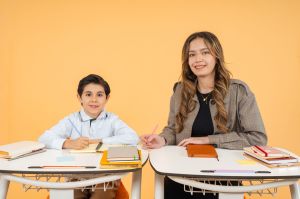
I work with a student that always wants to sit close to me and often asks if he can hug me. It is an understatement to say that it makes me uncomfortable. This student is now a freshman in high school and presents typically. What many do not know is that he underwent extreme trauma for many years. I first met him when he was a sixth grader, newly adopted, and was just starting to attend public school. Prior to this, he was living in a facility and attended school there. My work with him completely changed the way that I think about extracurricular activities and social development.
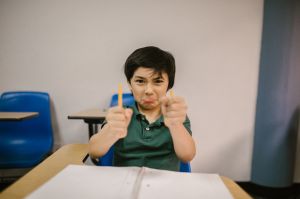
When I first started working with this student, he lacked the skills to be successful. When I met him, he was physically and verbally aggressive and was being served in a self-contained program within a public school district. There were other students in this program, but most did not interact with him – many of them also experienced challenging behaviors primarily due to their trauma histories, and their social skills made it difficult for them to create and maintain peer relationships. This particular student that I worked with was often combative and would create conflict even in the most mundane situations. He also had the added issue of periodically bringing things to school that could be used as weapons, such as knives, throwing stars, things that looked like arrows, etc. This was very challenging for staff as they often felt like he was unsafe and trying to be confrontational.
To help this student integrate into the general education setting, the first step was to establish a strong adult role model, as well as to introduce safety and regulatory practices which would allow him to reach a point of safety. This looked very odd to many outsiders as they had not experienced many of the strategies that we implemented. We started with caving techniques so this student would feel safe, particularly when other students within the space were presenting challenging behavior. We were also able to receive permission for him to utilize items such as his coat and/or hood in order to feel safe if a ‘caving area’ was not accessible to him.
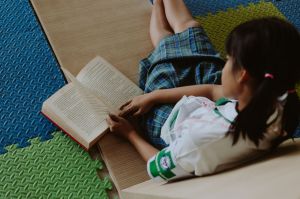
In addition, an additional P.E. block was introduced for all the students, where we introduced games that involved heavy work and/or balance activities in a collaborative, instead of competitive, way. This looked like throwing a weighted ball while balancing on one foot, and teaching all of the students to do a pullup (even those that needed assisted modifications). This was a game changer as it allowed the students the ability to play within a structured environment where they were able to work on pro-social skills. We also introduced restorative practices during academic times so that this student would feel safe and would associate academics with safety. This often included reading to him, him lying on the floor while covered in blankets, or sitting in an odd way. Many of the other students also requested this activity, thinking that they were getting away with something by not sitting at a desk to do their work.
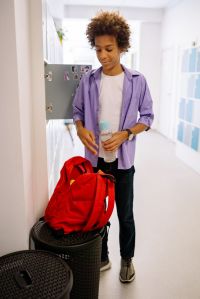
We also created many tasks that were associated with the maintenance of the space but had a dual benefit of regulation. For instance, coat hooks were put 18’ above the average students’ head height so they had to reach up to hang their coats and bags, which created regulation by having to reach overhead. All supplies were kept at ground level, so they had to bend over or squat to obtain items and hence push the serotonin from the gut into the bloodstream. Everyone also had a water bottle that needed to be filled in the morning and consumed before leaving the space. We had very little impact on nutrition due to providing supports only within the school, but we were able to help ensure that students were not dehydrated, and filling the water bottles acted like a natural regulator.
While regulation played a big role in allowing this student to become safe enough to learn, it wasn’t enough. Once his nervous system felt safer, the next challenge was creating opportunities for connection. This is where extracurricular activities and other structured social experiences can have an impact.
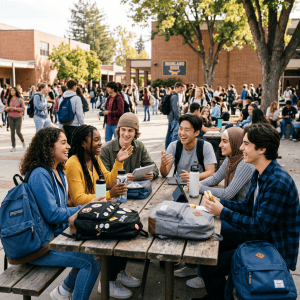
Even after students begin to feel safe, many continue to struggle socially. The general education setting would be especially challenging for this student, as he would resort to verbal aggression or ‘shock talk’ for feedback, despite his extreme intelligence. Many of our students struggle with this, as their trauma histories have resulted in experiencing relationships that have not been consistent since birth. This results in a fear of not belonging, and gaining peer feedback becomes one of their highest needs.
This is something that many schools often struggle with, as they say that students do not respect authority and do not respond to consequences. This has a lot of validity to it, as traditional approaches typically do not result in creating appropriate behavior. These students deeply fear not being a part of the social collective, and the consequences of that impact them greatly. So, how can we use this information to keep students that struggle with these challenges from becoming repeat offenders, and in turn, disrupting learners, causing stress to educators, and taking up precious time with administrators?
Create Social Scenarios Where They Can Thrive
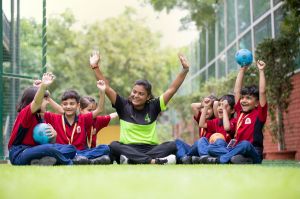
It often starts with helping them to establish a positive relationship with a trusted adult. That adult can then use their own social value to help integrate other students through small group facilitation (typically with one other student, over time adding additional students to the grouping works as well). This is often effective at lunch (as food is a regulator), in Unified Arts (where students are naturally put into small groups and have another activity to focus on), and in extracurricular activities.
One example of this was a “Lunch Bunch” that I facilitated when I was a teacher. Students often initially attended because I brought in food or because they were overwhelmed with the cafeteria. Over time, however, those shared experiences helped students form stronger relationships with one another in a safe, structured environment.
The research on extracurricular activities is extensive and consistently shows that those students who participate show higher levels of school connectedness, school engagement, and social competence (Wilson, 2009; Wachsmuth et al., 2023). In addition, students who participate in extracurricular activities have greater academic success, greater character development, more positive social development, and an overall greater interest in community involvement within the areas of peer relationships and appropriate social conduct (Christison, 2013). These structured opportunities become even more powerful when they combine movement, regulation, and social interaction.
Creating opportunities for play that also implement conflict resolution can be especially effective, especially if the activity is also regulating. This is why we often implement more movement and reduce competitive activities until students have developed stronger social skills. Activities that naturally create a sense of safety also prime the nervous system for social interaction, which is why approaches such as restorative work and caving can help prepare students to engage more successfully with others.
Give Students Opportunities to Lead and Help Others
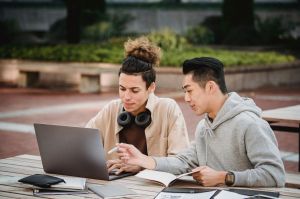
In addition, creating scenarios where students can help support the learning of others changes the dynamic of how they interact in a group setting. This can result in students performing at a higher level while developing social skills that generalize to other environments. This may look like a student who is strong in math assisting students who need additional support after instruction has been provided by the educator. Unified Sports are also very helpful as they integrate students of all levels and student to student support is the model.
While the activities themselves may look different from student to student, the goal remains the same: creating repeated opportunities for safe connection. The key is to find the activities that the student will feel motivated to participate in. It may be because of the specific activity, a person participating, or an incentive of the activity.
This student eventually decided to join the track team. He was often surprised when other students would say hello to him in the hallways or tell their friends how funny he was. Before long, his teammates were inviting him to sit with them at lunch, and those connections carried over into the classroom. When teachers asked students to partner up for activities, the track athletes would often choose him. Instead of being known for his challenging behavior, he became known as a funny fellow athlete. Watching this transformation reminded me that extracurricular activities are rarely just about the activity itself, but about creating opportunities for connection.
Encourage your students to try something out. Sometimes the first activity may not be a match, but taking the risk to try something new will be a game changer. The important part is continuing to create opportunities for connection. For many students, one trusted adult, one supportive peer, or one extracurricular activity can become the turning point that helps them feel safe enough to grow, connect, and succeed both in the classroom and beyond.
References
Christison, C. (2013). The Benefits of Participating in Extracurricular Activities. BU Journal of Graduate Studies in Education, 5(2), 17-20. https://files.eric.ed.gov/fulltext/EJ1230758.pdf
Wachsmuth, S.T., Lewis, T.J. & Gage, N.A. (2023). Exploring Extracurricular Activity Participation, School Engagement, and Social Competence for Students With Emotional and Behavioral Disorders. Behavioral Disorders, 48(4), 255-268. https://files.eric.ed.gov/fulltext/EJ1384553.pdf
Wilson, N. (2009). Impact of Extracurricular Activities on Students. University of Wisconsin-Stout. https://minds.wisconsin.edu/handle/1793/43405

