
Over 20 years ago I was working with a student and we were headed to get lunch. Our goal was to practice waiting in line, as the student had never been asked to wait. We watched the line and were able to jump in with only two people ahead of us. At this point, the student became agitated with having to wait. He has been very physically aggressive towards others working with him, but to date had not been aggressive towards me — that was all about to end.
The student turned to me and started striking me and kicking me. I blocked several blows and was able to move him out of the area with some body positioning. I looked up, seeing another staff member, and received a blow that resulted in my nose being broken. I struggled through this event to keep this student, myself, and others who were walking by safe, but thankfully, the student did regulate after a time and we were about to resume our day, and I was able to seek medical treatment.
This event caused me to question my skills, my relationship with this student, and my current level of training to manage physical incidences. In reviewing my skills it was clear that I thought more highly than I should have of the skills I had at the time. When looking at the relationship with this student, I could also see some areas that could be further developed. I was aware that “waiting” was not a skill that this student had developed yet and that I needed to be prepared for moments when students did not have skills and also felt unsafe. This particular student’s feeling of not being safe stemmed from not knowing when, or even if, his lunch would arrive. The combination of these two things could result in the physical incident that occurred. At this point, my quest to increase my skills and help individuals feel safe was born.

Over the years, we have had significant training in crisis, body positioning, body mechanics, maneuvering, physical interventions, weapons disarming, and the list goes on. Despite all of this training, we very rarely find ourselves in situations where we need to use these skills. My training in body language, nervous system, regulation strategies and safety practices have ensured that those we support are safe to themselves and others more than 99% of the time. How is this possible when we provide supports to those with a history of physical incidences, typically to the point where they are no longer in the general education setting?
The most important thing that we share with families, educators, and caretakers is to have a strategy. This may sound simple, and oftentimes it is. Whenever we step into a situation, we have already come up with a plan, a backup plan, and a backup to the backup plan. This could mean a tough conversation with an administrator, a physical situation where a student is unsafe, or coaching a family through an issue. We learn new information during every situation and we try to approach it with a sense of curiosity.

I will say that it is the most challenging to do this when we are dealing with situations in our own homes because of the intense emotional connection. This can bleed into work environments too, as sometimes we can feel as though a situation is consuming us and we feel like we just can’t seem to change it. When this happens, the key is to regulate yourself first. This may mean that you have to first distract yourself from the situation in order to have some distance so you aren’t ruminating. You may also participate in a regulation technique that you know works for you, while employing safety strategies.
This could look like taking a bath while reading a book, or listening to a podcast on something you want to learn about that might be related but isn’t the exact same issue. Once you feel regulated, then you have to challenge yourself to try a strategy to make a change. Spoiler Alert!! This is usually where most people get stuck, as they want to return to what makes them feel safe or regulated, however, it is imperative that we push ourselves outside of our comfort zone.

We typically tell educators and families to hope for the best and plan for the worst. We also have variations of plans in between. This can, unfortunately, put us into a state of hypervigilance, so it’s important to implement more safety strategies and practices to regulate yourself before and after you have pushed yourself or someone else outside of their comfort zone. If you keep seeing the unintended behavior, then the strategy may not be the right one.
We often see physical incidences that have become habitual, and there are often tell-tale signs for those that escalate very rapidly.
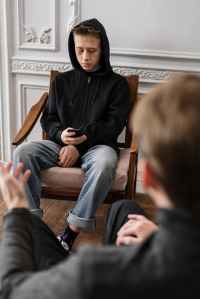
Here are some signs:
- Inner parts of eyebrow pointed down
- You can see the white above the iris, sometimes you can also see the white below the iris which indicates instability
- Chin is jutted forward and up away from the body
- Arm splay
- Weight is forward in the upper stomach and shoulders
- Chest pop
- Toes pointed at target
- Jaw line is tense
- Dimpling or ripples on the chin or jaw
- Bottom lid of eye is flat
- Looking around the room quickly (often looking for exits)
- Teeth together biting
- Thin stretched lips
- Holding the chin (can also mean thinking)
- High pitched screaming/yelling, out of control laughter
- Crossed arms
- Palms pressing down
- Tapping the leg with fingers/hand
- Fist in front of the neck
- Body splay or sprawled/taking up territory
- Knee flexing
- Fast Impulsive movements
- Ear tugging
- Rubbing the brow
- Chewing items (not food)
- Covering mouth while talking
- Hard swallow
- Adam’s Apple moving
- Hiding the fingers or thumb
- Playing with sweatshirt sleeves or strings
- Hands or fingers pushing on the heart
- Covering the lower abdomen
- Ankle scratching
- Hip rocking or rubbing
- Foot withdrawal
- Barrier in front of the body
- Playing with necklace, shirt collar, or neck of shirt
Now that we know some potential signs to look for, what are the interventions that provide the greatest level of success?
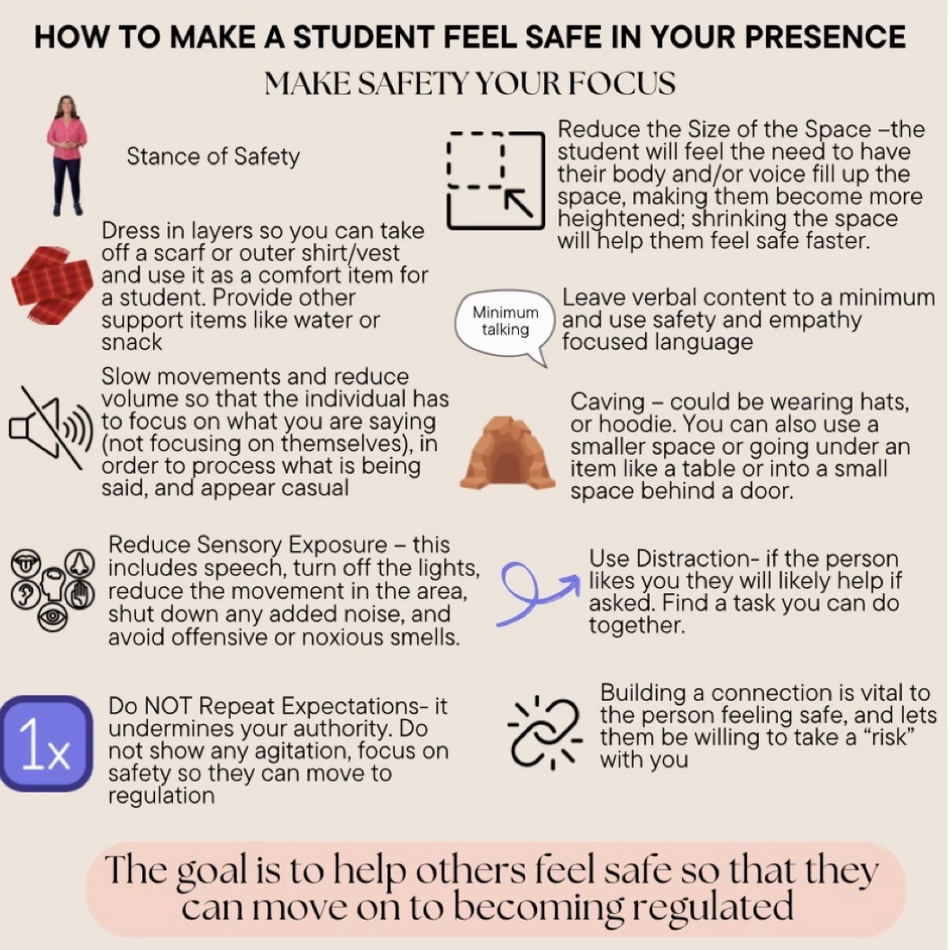
The “Stance of Safety” is our greatest tool, as we can use our bodies to create and impart safety to others. Here it is broken down:

- Tilt the top of the head to the left, as this conveys empathy to the other person. If you tilt your head to the right, this conveys intelligence. When making someone feel safe, you need to let them know you feel their feels.
- Lift your chin, open your mouth, and lift your eyebrows. This will show that you are paying attention and will reduce the likelihood that you look like you’re being “judgy.”
- Relax your shoulders and keep your hands in front of you with your thumbs lifted. This conveys confidence and will reassure the other person that you can keep them safe.
- Make sure your hips and toes are pointed at the person so they feel that you are focused on them.
Oftentimes, when this stance is used, the physical incident will extinguish within seconds or minutes. We may then use our layers as comfort items, create a cave, or use distraction. If additional interventions are needed, we may even use ice or water as a regulator, or try increased proprioceptive feedback. We could even try and increase serotonin output by dropping things on the floor and having the person help us pick them up, which puts pressure on their stomach. (Sneaky, but works well). Bottom line, be opportunistic with what is in your environment and have a plan.

